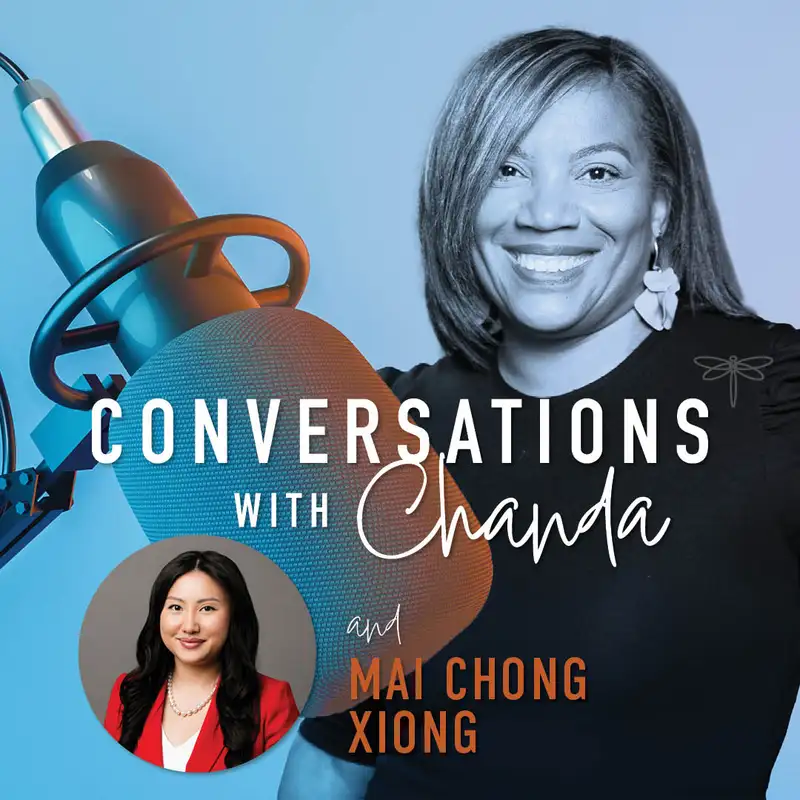
Alfonso Wenker: I am here today with Ramsey County Commissioner Mai Chong Xiong, and I'm really excited to talk with her about that role, but more broadly how she thinks about leadership, why she's passionate about Ramsey County and that journey. So welcome to the conversation Commissioner.
Commissioner Mai Chong Xiong: Yeah. Thank you so much for having me here, Alfonso.
Um, it's truly an honor and privilege to one be here and also to be able to represent, um, folks in my district on the east side, uh, on the Ramsey County Board of Commissioners.
Alfonso Wenker: Well, I'm, I'm excited to have a little bit of a conversation today. Why don't you start by telling folks what is a county commissioner?
All of our lives are affected by the county, and you represent the east side of St. Paul's. So tell us, um, more about what does the county commissioner do and what is the role of that county board?
Commissioner Mai Chong Xiong: Yeah. Um, uh, as the board, we provide the overall, you know, mission direction for our county staff. Um, we have a county manager who, uh, operates and man, uh, who executes the day-to-day of that big, broad picture and vision.
So as a, a county where we're almost at, um, invisible layer of government that, um, does not get the big, um, uh, reporting every day on the, in the news cycle. Um, but we do really important work, um, because how I see us is, uh, where the people side of. The government, um, big policies that are created at the federal and state level comes down to the county where we are the ones who administer those programs and services.
Um, many of those is whether it's determining eligibility, um, managing cases, it can also vary and change from managing our roads, our county road system, uh, whether that be through our parks or through our. Parks and trails, um, a network. The other part, uh, which is newer and also that I had the, uh, opportunity to join with you all, um, is the trip, uh, is around housing.
So, uh, very new to the county is our ability to, uh, levy, um, our HRA for, uh, uh, housing redevelopment authority for the, uh, for the development, creation and preservation of our affordable housing units in across Ramsey County.
Alfonso Wenker: That's really helpful. And I, I like the, the people side of government, right?
Mm-hmm. We can sort of just think like the government as a whole and that that's like a lot of different layers and levels you have state, county, um, city level, federal level. What do you think is the, the biggest like misconception about the role that county commissioners play?
Commissioner Mai Chong Xiong: I'm in my first term. And, um, I've been in this role for about four years and before that I used to work at the City of St.
Paul and I was in, uh, council member AL'S office. And I think at that time the county was just still this level of government that was really hands off. Um, uh, when we were having, uh, uh, conversations about economic development around housing. And we just really also didn't understand, um, why the county made certain decisions.
And I would say, you know, there may be some sense of that from, uh, different community members. Um, but also knowing that being here, we have so many different, uh, organizations and partners that we work with already too, that, um, it's, it's making those decisions and sometimes it's, it's that. When it's effective and when, um, there aren't issues, that's when, you know, government is being run like really well too.
So, yeah, I, I would say that, um, Ramsey County, um, is, uh. A very diverse county and just in my spaces of where I'm at in both, um, our statewide association of counties, even national, um, organizations, I would say Ramsey County is, uh, we should be really proud of the work that our staff previous leadership has done for Ramsey County because we are really a model that other counties look to us for as well too.
Alfonso Wenker: What? What do you think makes Ramsey County that special model? What are some of the things that you think are unique or maybe not even unique, but that we do particularly well in Ramsey County?
Commissioner Mai Chong Xiong: Um, I would say some of it has been, um, a lot through, uh, both trial and error, um, but also, uh, uh, letting the voices of residents who engage with us lead and also, um, uh, letting staff lead, um, too because, you know, uh, trusting, um, staff to, uh, take on leadership roles to, uh, be immersed in community.
Um, it comes back tenfold. Uh. And an example of that is through, uh, a lot of the programs that we funded, uh, through, uh, the American Rescue Funds, uh, the ARPA funds, where we were able to pilot very transformative programs such as the Earn and Learn where we, um, invested in, um, uh, both staff and also had a different program with community partners where.
Folks can earn, uh, money while they're in training programs so that they can earn more later on. Um, that's an example. Another example is a driver's license academy where we knew that, um, where we used information from the county and saw that so many of the job postings, um. That were up required a driver's license, and that in itself is a barrier to getting a job already.
So we had a driver's license academy for young people so that, um, they, they can, um, be eligible even to apply for those jobs that required driver's licenses. Um, because what we were seeing too is, you know, we were also. Pointing out when trying to, um, uh, provide information to the private sector to say, Hey, some of these jobs you do not need a driver's license.
But, um, also recognizing that majority of the job posting still require that. Um, we made a move to fund a program like that, and that was also a program that was, um, transformative. We also were able to share with our partners across the nation about that type of program.
Alfonso Wenker: Thanks for telling us about that.
You know, it's interesting, right? You talk about that invisible layer of government, like somebody's family member might be participating in a program like that and not even know that Yes. That it's the county. Um, yes. You know, we, we, we could talk a lot about government programs, but our conversation today is really focused on leadership.
And you had mentioned you worked for a city council member and then made the choice to run for county commissioner and Yeah. What was, what was motivating you to make that run? You know, you were already leading as a staff member and you, you pursued this other kind of leadership, maybe a little more visible.
Your name is, you know, on things. So what, what was the motivating factor or factors that that pushed you into that making that run?
Commissioner Mai Chong Xiong: Yeah, I would say, um, you know, uh, I'm a first generation, um, Hmong American, so I was the very first one in my family to be born here in the United States. And, um, having to navigate systems for my parents, um, who didn't speak English very well.
Um. It definitely had an impact on me. I saw how, um, you know, how my parents were treated, right when we were, uh, basically, um, just in line for, uh, to get, uh, food assistance and or at the food shelves. Um, even people serving meant to serve, uh, serve that population, um, treated us like, um, you know, we were left then.
And then just trying to call the county, for example, to update our paperwork or just to, um, get all that, um, uh, all those things in line for, for my parents as a child. I think that really stayed with me. Um, two, uh, one of course like internalized shame. That's, um, built in in. Um, personal failure. Um, and then moving on to realize, um, and this is much through my college experience of learning about how, you know, programs and systems are set up, uh, how narrative, um, how the story that's being told about us was really not true.
So I think I saw myself, um. R really going up against the grain to say that's really not that lived experience of both for me, my family, and so many of my community members. Um, so I, I actually didn't know much about city government either or about the local government. Um, must, most of my experience in, uh, college was focused on state and also federal governments.
Um. And I quickly realized that at the local level here, um, this is actually where so many decisions, um, get made, uh, about where housing projects get, uh, built, about where, uh, rec centers, where libraries are invested and our roads. So I quickly saw that and also saw that, um, the county plays a big role in that as well.
So, um, that was, uh, a very big piece of, uh, what drove me to, uh, stay, stay in, um, public service, um, is wanting to change lives of, you know, families like mine. Um, but then also to say that, you know. Uh, I'm, I'm a part of this community too. Um, I belong here as well. So I, um, that's why it was a really big decision for me to run for office and to really say, um, you know, I believe I am speaking out for so many of my neighbors who have a similar experience of, you know, working really hard, following the rules and still finding it really hard to get by.
Alfonso Wenker: I, I'm really appreciating this piece around narrative and it's something that comes up in a lot of these conversations, and you talk a little bit about flipping the narrative like that, that sense that your interactions with government. Had the potential to create a sense of shame. And you sort of took that and said, but if we were able to talk about communities that I'm from in a different way, in a more accurate way, in a more truthful way, um, we don't have to create that sense of shame for people that live, that for people who are, are neighbors, right?
Yeah. And so for you, what is, what is that? New narrative, or maybe not even new, but what, is that more accurate or more complete narrative that you're trying to tell now that you're in this position?
Commissioner Mai Chong Xiong: Yeah, I, um, I've been really, um, thinking about that a lot too. Especially as, uh, we are in the intersections of the moment that we're in of a very extreme wealth and equality in the United States.
And then, um, also we, um. Wealth is hoarded at the very, very, very top here. And we, in the richest country, one of the richest countries in the world, we have, um, kids going hungry, seniors, um, uh, what, who are hungry, who are going to food shelves, um, and not being able to retire with dignity. And so that's, that's where, um, I, I really.
I have been wrestling with and how I talk with residents about this too, that it's really not about, uh, uh, the political parties left or right. Right. But it's really about all of us, all of us, um, everyone, um, making a conscious decision that, you know. Uh, wealth should not be concentrated at the very top in this way, especially in, in our, uh, capitalistic economy where, um, it's about, uh, goods and services, um, and paying for, for that.
Um, when we see that happen where wealth is, uh, at the very top, um, it means that they control, um. Corporations control pricing. They, um, uh, it's, it's not about, uh, the power for, uh, working people, uh, diminishes. And we've been seeing that across time too, where workers don't have many rights in terms of, uh, very low wages that have not increased due to production, uh, tied to production at all.
We see, um. Uh, healthcare, uh, being a, a co cost that continues to drive up. And then now we see our food and our, uh, groceries. Um, it's increased, uh, so much. It, it becomes really, really unsustainable, um, for, for all of us.
Alfonso Wenker: Y you began and end that thought with all of us. And so it could be easy for you to say, I am, I'm in it just for the east side, or I'm just in it for, um, first generation Hmong women like myself.
What leads you to be so committed to this idea of that it's all of us.
Commissioner Mai Chong Xiong: I, I've been thinking a lot about, um. What, how my pa, my family arrived here and as a first generation, my parents, um, or at least learning about my history is that, um, Hmong people were, um, indigenous peoples, um, all the way dating back to China where we were always moving because.
We didn't want to, um, uh, follow a government. We, we really wanted to remain independent and free, and so never complying with the government. And so that's why we're always like forced to move, um, consistently into, um, you know, other parts of Asia. And so, um, what reminds me about that is the strength that my parents, my ancestors, have to have of trusting family, of trusting community, um, that.
Um, that was survival. And so I, I really see that here and also have benefited from so many of the programs that, um, helped support my family, right? So, uh, food assistance, medical assistance, um, public housing, those were all programs that helped support, um, my family and just one generation, um, to, to become contributing members of our, uh.
Of our community here. So that's why I was like, it's really all of us. Like these are the, uh, these are programs, um, uh, and our successes are intricately, intricately, like tied to one another. So that's why I always say it's like, it's all of us. Like, like my success is dependent upon the success of my neighbors.
Alfonso Wenker: It is, it's a pretty powerful sentiment. And, and there's something you said about part of the way that. These programs work is so that folks can participate more fully in their community.
Commissioner Mai Chong Xiong: Mm-hmm. And yeah.
Alfonso Wenker: What, what, say, say more about that part. That, that it's not just support to kinda get your feet under you, but when we are fully supported, we're able to contribute to our community.
Like talk, talk to me about that.
Commissioner Mai Chong Xiong: I think about, um. The value that, um, I have and the value that I know so many people have about, uh, that there, that we all each have inherent worth and dignity. Um, and that there are basic things that we all need for survival. And then also the path to growing healing is all going to be very different.
Um. And I think those are like lessons that I've learned as, you know, a child who grew up in, uh, in poverty. Um, there, there are 10 of us. I have 10 siblings, uh, just from my biological mom and dad. And each of us, uh, lead very different lives and, uh, different perspectives about, um, how we one can contribute, and two, how we can find meaning in our work.
And I, for, for me, um, I've come to just appreciate the diversity, um, for, um, for people's own individual casts. I, I thought about. Uh, like, uh, for myself, how, when I was navigating a system that I didn't have the vocabulary right? Um, for, for example, when I was in college, I was like always so tired. I, I thought I was like depressed.
Um, and then like, and at that time I didn't have consistent health insurance. Then I, later on after college, I realized that I, um, and, and when I had health insurance, I started seeing my, my doctor again, and we got my thyroid tested and realized that, um, my thyroid was affecting me feeling so tired all the time.
And when I looked back I was like, oh my gosh. I think it, had I been treated earlier, you know, from high school on, um, I would've done so much better. Like I was a B student, you know, in, in college I could have been an a student. Um, and tho those are the things that I, I think about, um, as when you're asking me about, um, for me, uh, about being full contributing members, is that like, you know, just.
One little thing like that, um, can make such a big difference. Um, and that each one of us are going to need different, I weight things to be able to contribute fully. So, uh, I hope that helps to answer some of it, but, um, uh, that's what my mind goes to when I think about, um, uh, everyone being able to contribute as their full selves and their whole selves.
Alfonso Wenker: Yeah. You, you have this way of, I think. You notice the, the part that's off and I, I hear you like, you analyze like, okay, this was what was off with me, or this was the missing component for my family, or this was what was happening in healthcare. This was what's happening in, in education and there's so much about how you talk about like making it all whole or sort of piecing it all together.
And as you talk about. The function of a county commissioner, like, I think, like Oh yeah. You're, you're mapping all those pieces and like helping them be part of a, a greater whole. And, um, I'm thinking about this leadership journey that you've been on. Yeah. And you talk about growth and healing and, um, talk to me about.
How being whole and healing yourself has been a part of your leadership or how has it been a part of your leadership journey?
Commissioner Mai Chong Xiong: One, I think it's, um, growing and experiencing and being, um, pushing myself to be uncomfortable and, um, learning, um, to embrace, uh, mistakes. Um, and then the other part of it is finding supportive people to be around.
Um, um, I I just think about how, uh, fortunate, uh, I am to have a very strong, um, community in terms of like having supportive family members, supportive, uh, spouse, um. Having, um, a diverse group of friends, um, and then also mentors along the way. Um, that these are all things that I want for everyone to have, you know, to have very strong and rich and diverse connections, meaningful connections, um, to be able to grow.
Um, I think those are definitely components or ingredients, um, in my leadership path and experience.
Alfonso Wenker: Yeah, let's keep, let's keep digging in on that leadership path. You know, you talked about being first generation, supporting your family, then we fast forward through college and you're, you know, at some point in your career you're working a council member's office.
You're now, um, a county commissioner and. What does it take to be a leader right now in this particular moment with all of its complexity, um, everything that's going on in our communities. You named wealth inequality among a number of different issues. And how, how do you think leadership is unique right now?
Or, or what does it take in this moment that maybe has been different in other moments?
Commissioner Mai Chong Xiong: Um, you know, I. I would say, and I've always heard, um, that, um, um, that I, certain leaders are the right leaders for that point in time. And so I've been thinking about leadership as, uh, fluid. Um, meaning that, um, we either step up or we step back and make space for others. And that's also been my experience in community organizing, um, in our spaces of like, uh, making space for others, stepping back, um, and also stepping up when we, we see a need and, um.
Uh, I would say that, um, my, uh, I, I've been, I've been looking at leadership in that way and then also thinking about the traditional leadership of like having, um, always having to be like. The loudest person being leaders, or like the most masculine, um, uh, uh, having leadership skills. And for me, I, I would say I am, uh, for a long time I would not have seen myself as a leader.
I was very introverted. I, um, you quiet, uh, stuck to myself. Um. I just wanted to get things done. And sometimes it's, it, it's easy to, uh, slide back to those things of, of what feels comfortable. And I mentioned, uh, um, I mentioned already too about, um, having to, um, uh, step into the leadership, um, and having to speak up.
So I feel really challenged at times to do that. Um, just both in, uh, like. Internally, but then other times it's also like I feel called or I, I feel a need to do that because if I didn't do that, especially in my role as a county commissioner, I would almost be leaving power at the table, right? That I'm not leveraging, um, the, uh, power that I have, um, to be able to speak up for, um.
A district or for people in Ramsey County or, or for people with lived experiences like mine. So I would say, um, that in this moment in time that we really do need leaders who are, um, uh, who are bold, who are, um, going to speak out for, um, all of us, right? Um, all of the, uh, working class people and also, um, uh.
Uh, not, uh, uh, also invite people in and, and not, um, uh, uh, keep people feeling, uh, isolated, alone, and ashamed. So I think, I think right now is, is that moment of like, that that's the type of leadership that we really need.
Alfonso Wenker: Yeah. The interesting thing here is, right, like you said, leaders make space for other people, and certainly there's a part of your role that means you're in the front of rooms or you're speaking in public, or you're, you're moving things forward in a way where it's your voice in your face, but.
O Oftentimes I think about leaders who lead in public are only as strong as the, the community that they're bringing with them or the community that they've built around them, or the community that has lifted them up and, and within that is the idea of a community being powerful. And you talked a little bit mm-hmm.
About power. And I would love it if you could. Say more about how do you think about power and where does it live and who has it, and how is it built and how do we use it? I think there's so many examples in government, especially right now, of people overusing or underusing the power that they have. Mm mm-hmm.
And, um, yeah, just how do you think about your own power, building power with other people? Like talk, talk to me about that.
Commissioner Mai Chong Xiong: Yeah, I've had, um, the privilege of being around so many different, uh, thought leaders in Minnesota through, uh, you know, after college I joined, um, take action Minnesota as a leader.
And that is where I, I received a lot of like the training around community organizing and, um, some, some great quotes that come to my mind about leadership community organizing is really that, um. Waiting for good people to do the right thing is a bad plan. Oh, I like
Alfonso Wenker: that.
Commissioner Mai Chong Xiong: And, um, I, I think about power and, and then learning about power that, you know, power isn't necessarily, um, good or evil or, uh, bad or positive.
It's, it's really, um. Hours, like the ability to act and, uh, the ability to, to do what you want to do and be able to do it. And for, for community organizing that requires both, uh, people and money, right? Um, inviting people. Um, organizing money, um, to get to a common goal. So that's, that's how, uh, how I think about power, um, in a lot of ways of like bringing people, uh, together to work towards, um, uh, uh, either a, a cause a a campaign, um, and or, uh, uh, an electoral campaign.
Um, and, and overall it's, it's to move people and to, uh, be able to meet what their self interests are. Um, and I used to think that like if I came to a meeting and I only had my own agenda, that it would be very selfish. Um, but I've come to realize that no, that is in fact like. The most powerful way in which we build connections across, um, across all, uh, a lot of barriers and differences is actually sharing that about ourselves, about sharing who we are, where we come from and where we wanna go.
Um, that, that's actually like, uh, a very powerful way to move with each other. And I would say that that is historically how old, um. Uh, being from a, a collective, uh, community, um, sometimes it, it feels like, it's like you're sacrificing your individual, um, uh, uh, goals or ambitions for the, uh, greater community.
But really it's about, um, making, making a norm, but like how you work with each other and, and that's really the big, um, uh, piece about moving together powerfully. Uh, so I would say that that's how I've thought about power. Um, and for me as a county commissioner, I have, I have, um, uh, uh. Parts of it is formal power, right?
Like I have to pass a budget. I, uh, and it's a budget of the people's money of property taxpayer dollars, right? Those are the formal powers and duties. I think about, um, the informal power of me saying that I represent 78,000 people and this is what I'm hearing from my constituents and residents. Um, and so those are, uh, some of the powers, um, that I think about.
And then. Um, in community organizing sometimes it's always about like mapping out who, who are the decision makers, uh, what does it take to move these decision makers, or, or what are the relationships that, uh, can influence, um, change to happen? And so that's, um. That's a long way of saying about like how, how, how my mind thinks about, uh, still, um, power, but also really still deeply connected to community in, in moving together.
And then the last thing I will add about, um, community power is these last few months, um, during Operation Metro Surge, uh, I've. Have never been more proud to be a part of a community who will speak up and stand up for one another. And it is exactly, uh, this type of community that Minnesota continues to be an island in the Midwest.
Where we have the firm and rooted belief that, you know, our neighbors matter and that, um, you know, helping one another, um, really matters. And, and that's why we continue to be, uh, the North Star. Um, so I, I just wanna say that in so many ways, uh, people have been organizing, uh, people have been moving and holding and leveraging and wielding their power in so many different ways, and that.
Many times it's not going to be one elected official. It's not gonna be one, one person. If that's, uh, all powerful. It is really, uh, uh, the collective masses, um, really, um, uh, seeing that their voices are powerful.
Alfonso Wenker: I want to connect. This moment to what you're saying about building power and there's so many people who are showing up, whether it's doing food delivery or helping people pay rent or patrolling their neighborhoods or just tuning in to being involved in their community and who are maybe fresh to getting involved.
What are your thoughts on how we can. Capture this moment and invite more people into this idea of all of us, you know, contributing to the community. This isn't, this is a moment and, and we need that groundswell of energy. And if more of us were participating more consistently, we would be more powerful.
We would be stronger. Right. And so what are some of your thoughts about welcoming more people into community work?
Commissioner Mai Chong Xiong: Um, I would say that I, uh, with what I mentioned about leadership earlier, right? Um, is there, there's a, a certain path, um, that everyone has, like everyone has their own path and I don't always think about things, um, of like that things are linear.
That you need to go from A to B to, you know, to be able to get a ZI think that it's very much like, um, um, circular and you probably can see that from like my conversation and how I think about things is like everything has a place in time and a cycle to things and that is also human. Like, we need time for action.
We need time for rest, we need time for, uh, recovery, and we need to honor that. So in leadership spaces, um, as people are, uh, getting involved and active, it's like definitely take time to, uh, to recover, to rest, to make a plan for yourself. Um, and then also. Um, uh, when you, when you have, um, the ability, the energy, the abundance, uh, to be able to give, um, uh, give and find where, um, you are most effective or, um, where giving gives you energy.
Like, don't give and not feel energy, but when you're giving, if you're feeling energy, like keep doing that. Like stay focused on that, fine tune that, um, uh, skills, that skillset or that gift. Um, and so I, I've just been in very many campaigns over time, um, where many people feel burnt out, um, and then they don't come back into organizing.
Um, uh, but you know, I, I give them, uh, and I give the people that I've worked with, um, that grace, you know, it's, it's really respecting the individual to make that in individual choice for themselves.
Alfonso Wenker: You mentioned different points in time, and I want to go back to the beginning of your leadership journey, and I always like to understand.
What were the first moments where you thought of yourself as a leader or someone called you a leader, or you realized like, I'm leading? Like what are kind of those early moments or, or what was happening or what were the indications that you were like, oh, this is leadership, or someone told me, or like, and then how did it feel to kind of have that, that realization?
Commissioner Mai Chong Xiong: Hmm. Um. You know, the, the most recent one that I can think of is, um, even on our county board. On our county board, um. Um, it's, uh, both, I would say it's both the experience and then, um, uh, experience in terms of time, right? The, at the time that I, I put into, um, uh, into serving in my role. And then number two is, um, the way in which I lead or, um, uh, or provide.
Um, examples to my colleagues where, um, they were coming to me and asking me for advice and also, um, asking about, um, strategies or how to make something happen, you know, col collectively as a board. And, um, you know, just, just sharing my own individual experience and my own individual knowledge. Um, you know, was that starting point and then later on to be asked to say, Hey, like, would you consider leading in this area or would you consider, um, uh, doing this?
You know, so those were like points in times where I realized, oh, um, my. My, both, my experience and, and my knowledge in this area is, uh, being called on right to, to one serve, but also to lead. Um, so those were the times that I realized that. And then the time where you're really trying to get to about like when I like ran for office is, um.
Similar in ways where, uh, it was coming and, or hearing it from, uh, different groups of people. Right? Like I was hearing that from, um, people that I've worked with where they're like, oh, you know, you would be great at this or you should consider running for office. And then, um, friends, uh, that have worked with me personally on campaigns where they're, they're like, we can do this.
Um. And then, uh, for me, um, and, uh, determining whether I wanted to move into public leadership or not was really about, uh, one is like myself personally, like my family situation, um, uh, to see if that's even a possibility. Um, and then number two, it's also, yeah. Yeah. At some point it's just. If I don't do it, who will?
If, um, if the status quo remains, what does that cost to, to me and to my family and to my community? So those were some of the things that, um, really pushed me and to realize that, oh, like I am that leader for this specific, uh, space and time.
Alfonso Wenker: Yeah, there, there's something in there about listening, paying attention to the moment, believing your community.
What would you say to a leader in a, not even someone who's necessarily thinking about running for office, but someone who is being called on or invited into, like, we want you to rise into your next stage of leadership, but they're hesitant. Or they're, they're not sure, or they're just wrestling with, like, is that really me?
I'm hearing from my community it's time to kind of move into that next level of leadership, but they're, they're hesitating. What would your advice be to them?
Commissioner Mai Chong Xiong: Um, my, um, uh, I, I always ask the question even with, um, the leaders that I work with about is. What's the cost? And cost can mean, um, you know, uh, uh, time, money impact, um, for, for anyone, right?
Like, what is the cost to you, uh, if you choose to do this, uh, or if you don't choose to do this. 'cause there's a cost to that too. Um, and then the other part of it is I would ask, um, is, is this something that they would regret if they didn't try? You know, like, would you, would you regret this if you didn't try?
Um, so I think those are, um, questions that I always ask of, uh, folks as they move into their leadership positions. Um, and or when they challenge power.
Alfonso Wenker: Well, we're getting close to the end of our time here, and, and so I always like to ask folks, you know, what do you do to stay grounded? To stay joyful? Are you reading certain things, listening to certain things?
What are some of those practices for groundedness and for joy for you?
Commissioner Mai Chong Xiong: Um, for me it's about being with people that bring me joy, um, because. I am, um, bombarded with so, so much, um, information, um, that I can quickly go into a rabbit hole, you know, like just learning more already. Um. So I would say what brings me the most joy is, um, being around the people that I love, um, being in community, um, where working towards, um, um, uh, same issues or, uh, common cause.
The other one is just, um, taking it slow. Um, I, I do, I have backyard chickens and. Yeah, those are some of the joys that it brings me at this moment of, of watching, uh, keeping, uh, chickens, uh, trying to, uh, grow, uh, my garden. Um, those are like the, the quiet, consistent type of things that helps me to, uh, have joy and, and pour, pour joy into my life.
Alfonso Wenker: I love that so much like that, that there's things beyond, uh, just the intellectual, right? Yes. The gardening, the chickens, the people. It's very real. If folks wanna learn more about you and about your work, where can they find that online?
Commissioner Mai Chong Xiong: Um, most of my work that I do around my, uh, role here is on, um, uh, through my.
Newsletter. Um, so I haven't moved to an online, uh, type platform for podcasts or anything, but, um, I, uh, communicate very consistently on my newsletter. And then on the, uh, and then, um, second most active is through Facebook right now. Um, that is, uh, just where I see a more engagement, um, from is my, um, my, uh.
It's uh, uh, my Ramsey County Commissioner, district six.
Alfonso Wenker: Alright. And then we gotta shout out district six. So where are some of the best places, small business, community organizations, places that folks should visit or stop by or, or spend if they've got a little extra money? Where in district six should people be going?
Commissioner Mai Chong Xiong: Oh my goodness, there, there are so many places. Um, I would say. Uh, uh, the best place where you don't have to spend money is the Bruce Bento Trail and also Falon Lake. Um, and that is where, um, and you know, it's, it's connected to the Bruce Bento trail, um, that connects, uh, across to the trails here on the east side to the, the, uh, the, um, uh, greater trail.
I, I forget which trail it is, but it's the Bruce Vental trail and then, and or Falon Lake. Um, and then restaurants where folks, uh, uh, do wanna spend time is, um, there's a hidden, it's not so much hidden. Um, uh, a lot of people know about it, but it's the, um, Hmong Village. They have so many vendors, um, and stalls of like both food, different types of food.
And then, uh. Shopping everything all inside there. Uh, and these are like the hyper-local, um, uh, uh, craftsmen and um, uh, business owners where they're the other, uh, parts of, of. East side where um, if you want to have a karaoke or uh, have your own private room that, uh, has been super affordable, here is, um, cups and cheers.
And that's on VE Avenue?
Alfonso Wenker: Mm-hmm. Alright. I love Hmong Village. Okay. Let's say someone is never been to Hmong Village. What's the, like the snack or the food that they should get if they go there?
Commissioner Mai Chong Xiong: I go there for. It's a chicken dish and rice dish. Uh, I think it's called kga, uh, kga. Um, and it's the stall that is one of the very last stalls.
So, um, it, it, it's, um, it's uh, where the food court is.
Alfonso Wenker: Awesome. Awesome. Well, we always have to end with the food recommendation. Um. Ramsey County Commissioner Mai Chong Xiong, thank you so much for your time, your commitment, your leadership, um, here in Ramsey County. We really appreciate the conversation today and gratitude to you for being with us.
Commissioner Mai Chong Xiong: Thank you so much for having me. Um, please, um, uh, if anyone has questions or, uh, would like to do a one-on-one, um, I'm definitely open to that and I see myself, um, as a connector of, of groups, of people, of resources. Um, so my office is always here for anyone and also regardless of whether they're in, um.
District six or not. I would just love to make those connections because again, I know that my success is heavily dependent on the success of my neighbors.