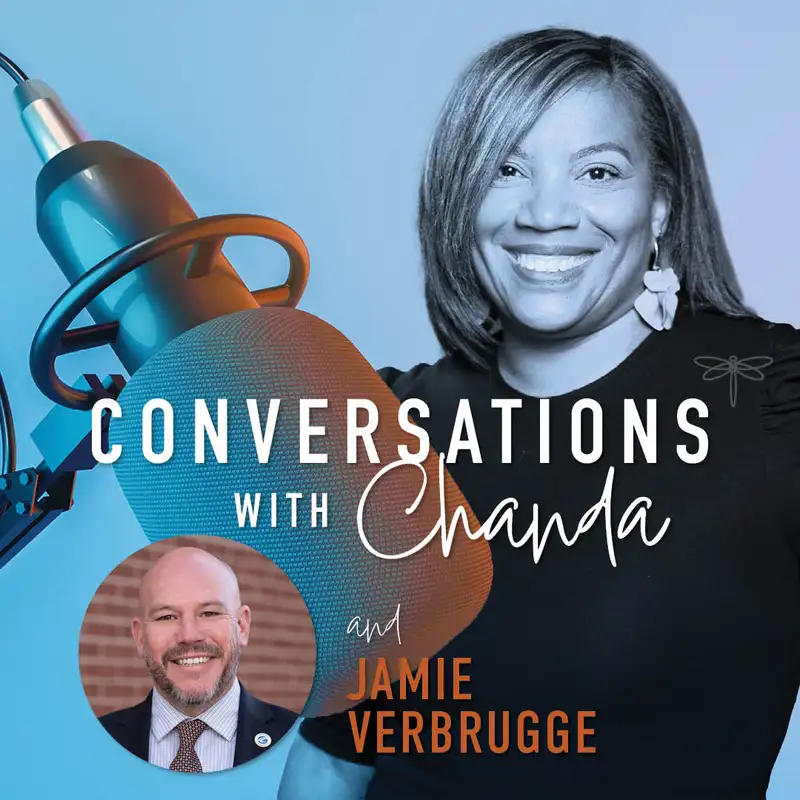
Chanda Smith Baker: Hello Community. This is Chanda Smith Baker and this is Conversations with Chanda. Today's episode will be a little different in that I've invited a guest to lead the conversation. Today's guest hosting this conversation is Alfonso Winker, the Senior Vice President of Community Impact at the foundation.
Alfonso grew up on the west side of Saint Paul and has spent his career working at the intersection of racial equity and community philanthropy. Alfonso will be leading a conversation with Jamie Berg, the president and CEO of Catholic Charities, twin Cities, an organization working every day at the front lines of housing stability and human dignity.
At the Saint Paul and Minnesota Foundation. Alfonso was leading a significant body of work called our Home State, a $25 million commitment. Two, addressing and moving along the pathways for people to own homes and to be housed.
Alfonso Wenker: I am on today with Jamie Vergie. Jamie is a leader at Catholic Charities of Twin Cities, has been leading them for a bit of time now, and I'm excited, Jamie, to have you in conversation today to talk about your leadership.
Um, we've been getting to know each other through some important work addressing homelessness in downtown Saint Paul, but I know your, your story is bigger than that and the work of Catholic Charities Twin Cities is bigger than that. So, um, why don't you tell folks who you are and, and in broad brush strokes what Catholic Charities does here in the Twin Cities.
Jamie Verbrugge: Thanks. Uh, I've been at Catholic Charities Twin Cities for just about a year now as the president and CEO. Uh, prior to being here, I spent more than three decades working in local government, so, uh, city manager in Bloomington for 10 years. Uh, before that I was in Brooklyn Park for seven years as a city manager at Rosemont.
I also had, uh, stints as I was coming up in the profession in Eagan and Richfield and Stearns County. Uh, so it was, uh, pretty significant. Change of life and, uh, professional commitment to decide to pursue the Catholic Charities position. I'm new to the nonprofit sector. What isn't new though is the, the work that we do in terms of community service.
Uh, what local government does is all about making, uh, communities stronger, making sure that, uh, residents and businesses and visitors have, uh, the things that they need to be successful and to thrive. And, uh, in the nonprofit sector, uh, depending on the agency focus, very much on the same thing. At Catholic Charities Twin Cities, our objective is to move people to a place where, uh, they have opportunity, they have access, and they can thrive.
And it's just doing that, uh, public service in a, in a different way. Um, so Catholic Charities, uh, twin Cities itself, we're the largest nonprofit social service provider. In the Twin Cities region, uh, we do our work across four, uh, main, uh, service lines. The first is, uh, permanent supportive housing. Uh, we have roughly a thousand units of permanent supportive housing, uh, at a different sites around, uh, Minneapolis and Saint
Paul. And for people who aren't familiar with the phrase permanent supportive housing, uh, that is housing, that is, uh, focused on people who are very low income, have been experiencing chronic homelessness, and, uh, meet a, uh, qualifying, uh, disability. Uh, criteria in order to be eligible for the housing. And so, uh, what we do is we work with, uh, our served community and our community partners to move people out of homelessness and into stable housing.
And then once, uh, we have the residents housed, then we bring, uh, to them the supportive services that are necessary to help move them to stability. Whether that is, um, is through our caseworkers and case management, whether it is addressing, uh, mental health challenges, uh. Whether it's addiction, uh, some people have physical disabilities that are limiting and, uh, job training.
Those, those types of services are provided as wraparound services, uh, to try and make sure that, uh, people, uh, can be successful and stable in their living condition. So that's the housing piece. Our second line, uh, that we're probably most recognized and known for is our adult emergency services. So these are the shelter operations and the day centers, uh, that are serving people who are experiencing homelessness or unhoused.
Uh, we have, uh, shelters in both Minneapolis and Saint Paul, the higher ground shelter in each of, uh, those cities. Uh, we also have the Saint Paul Opportunity Center, which is, uh, day service. Uh, uh. Drop in and meals. They also have the Fry Minneapolis Opportunity Center, which provides similar services. And then we also have, um, a couple other shelter services, but they are within the third bucket, which is our children and family services.
Um. That is the family Service Center in Maplewood, where we, uh, house, uh, family units together because the other shelters we have are for single adults. Uh, we also have Hope Street, uh, in Minneapolis, which is serving, uh, young people ages 18 to 24. Uh, and trying to get them, uh, stable and into, uh. Stable housing as well.
So we serve multiple, uh, uh, target audiences that, um, need our services. Our fourth service is aging Disability Services. Uh, we know that uh, the fastest growing group of people who are experiencing homelessness right now are older adults and, uh, many of them are experiencing homelessness for the first time.
So you can imagine how discombobulating that can be, uh, to have the challenges of aging, whether it is, uh, financial insecurity by not having enough retirement savings, um, loss of a spouse, loss of a job, uh, that creates economic insecurity, um, or whatever other, uh. Precipitating event, uh, comes by for many people if it's the first time they're experiencing that, uh, it is incredibly difficult, uh, to understand and to navigate the system.
So our team works with adults, uh, or older adults, uh, to help them through that. Uh, but we also have many who are on the verge of being unhoused. And so we work really hard to keep them in their homes, uh, by getting them connected to resources. So those, that's the, that's the overview of the, the four primary lines of service that we have.
Alfonso Wenker: Really helpful and, and I think, uh, Catholic Charities is such a visible agency in our communities, and I think oftentimes we know you for the building we see in our neighborhoods. So you're really present in a lot of our different neighborhoods across the Twin Cities. And so it, it's helpful to get the full picture of what you're doing.
'cause we might know you through childcare. We might know you through shelter. We might know you through, we, you know, our, our cousin lives in one of your apartments or something like that, right? And so, thanks for giving us the full picture. I, I wanna focus. On a, a couple of things. You said before the, you painted the picture of Catholic Charities work holistically.
You talked about opportunity and you talked about public service. So you have this long history of, of being a city manager, working municipal government, then shifting into the nonprofit direct service space. You know, where does that. Call to work with folks to move into a place of opportunity. Where does that call to public service come from for you?
Jamie Verbrugge: I can actually point to one specific, uh, interaction that I had. 30 years ago, uh, when I was working at the City of Richfield and, uh, we were, uh, hosting a new resident open house. And my, my role was essentially the coordinator of the open house pulled together a lot of different community resources and staff resources, uh, and then, um, identified people that we wanted to invite, whether they were living in apartments or living in new homes.
All based on this idea of welcoming to the community. And it was really a great event. And you know, I was 26 and I was feeling pretty proud of myself and, you know, it was a successful event. And I had a woman that came up to me at the end of the open house and she had, uh, her teenage daughter next to her and she said, I understand that you're responsible for this.
And I, you know, just kind of this, that's what we do, you know, it's great. I'm glad you're here. She said, uh, I just wanna thank you. And I said, well, you're welcome. She said, no, I, I mean, I want to thank you because I, uh, was just based at the, uh, air wing at the airport and I've, uh, moved around the country from place to place every two years, and my daughter, who is 13, has never felt welcome or connected in the community that we live in.
And today she felt that. And, and for me that was the clarifying moment about what it means, uh, to be in community and how important it is to welcome people and to give them a place where they do feel part of a community. Right. And so that has sort of framed my perspective. Going forward, and I was so lucky to have that moment early in my professional career to provide that clarity, um, where this idea of opportunity, uh, really became clarified.
Is when I, uh, when I was in City of Brooklyn Park, when I started in Brooklyn Park, it was, uh, a community that was in crisis. It was 2008. Uh, the, the mortgage foreclosure crisis was hitting really hard. Brooklyn Park actually experienced a higher rate of foreclosure than any other city in the state.
Between 26 2 0 0 6 and 2013, uh, about 20% of homes went through foreclosure. During that period, right? Incredibly destabilizing for, um, families and individuals. Incredibly destabilizing for neighborhoods. Um, Brooklyn Park had a couple other challenges. Uh, it had the highest crime rate in the Twin Cities at the time that I started there.
It also had had, uh, the most rapid demographic change of, uh. Most any city in Minnesota over a 20 year period and was among the highest change, uh, in the country. Um, I think it's fair to say that the city had not done a, uh, a really good job of recognizing the, uh, potential impacts of change in the community.
On the community. Uh, they had not. Made intentional effort, uh, to be connected to community, and I was fortunate to work with, uh, a city council and a staff and, uh, importantly community members. Who wanted to change the arc of, uh, history in, in Brooklyn Park and really focused on pride, thriving, and opportunity through the strategic plan that we adopted there, recognizing that a, a community that was, uh, half white and half non-white.
That had 20%, uh, of its population being foreign born. Uh, there was really a huge disparity in the amount of opportunity that people in the community had and what their access to that opportunity was and how they get to participate in community and how they feel connected to community. Um. Brooklyn Park is a very different community today than it was 15 years ago.
And, uh, there, there are lot of indicators to say that it is a successful and thriving community. And I, I was, um, really proud to be a part of that transformation. Uh, getting to Bloomington, same thing, uh, strategic plan that really focused on, um, getting community connected, uh, getting resources to community where it was going to have the most impact, uh, and being really intentional about how we welcome people into the community.
So that's, that's the strain, but it all started with that one interaction 30 years ago.
Alfonso Wenker: I struck Jamie by a word. I didn't hear you say in either of those stories, which is, I didn't hear you. I don't think one time say the word help. I I heard you say welcome. I heard you say thriving. I heard you say proud of, I heard you say transformation.
Tell me if you can, the distinction between leading from a place of welcome and pride and thriving versus a place of I'm leading to help someone else.
Jamie Verbrugge: Yep. Um, I am a big believer that, uh, leadership is a team sport and, uh, it is a shared obligation, uh, and that includes community, right? I, I don't think that the.
Organization, whether it is the city government or here at Catholic Charities, twin Cities can be successful if the expectation is that the organization is going to do things for people or to people, yeah, it really has to do things with people.
Alfonso Wenker: Yeah, absolutely. And, and I think so much of that, that welcome is when I feel like I'm with, who's ever gathering people.
That's, that's when I, I can feel welcomed, right? That, that something about. That event you put together 30 years ago, uh, left, left that family feeling like we, we matter here and we're, we're a part of this. So it wasn't put upon us, it wasn't, um, sort of about us. It was for us. We're, we're inside of it. And I think that's, that stands out to me in a lot of conversations I have that.
Sometimes in leadership, we can keep ourselves at arms length from what's happening around us. And so how, how do you stay, you know, Catholic Charities is a huge agency and so how do you stay close enough or proximate enough to those kinds of stories and experiences and, and. Ways of living that allow you to stay rooted in, in this notion of welcome and of thriving and of opportunity?
Jamie Verbrugge: Yeah, I, uh, that's a really good question. Um, I, uh, made an intentional decision when I started here as part of my learning. Um. About how the agency works, about who we serve and how we do the work was that I needed to be in the places where we're doing the work. So, uh, I get out to our different locations a lot and, uh, find opportunities.
Our, our volunteer coordinator and, uh, and our staff are really good about, uh, finding ways for me to be. Um, in those places and be able to connect with people, whether it's serving meals at, uh, so at the Saint Paul Opportunity Center, um, and getting to know the people. One of the places that I neglected to mention in, in the earlier comments was our Northside Child Development Center, um, which is part of our children and family services is going over to Northside, where we provide, um.
Very affordable daycare and early education, which is allowing families, uh, to be thriving because, um, you know, they can go out and pursue economic opportunity through jobs or education, um, to be there with those kids when I, when I'm having a bad day upon. So that's the place that I really like to go.
'cause it can't help walk out of there without a smile on your face. Right. But when I'm, but I'm, when I'm in these places, the opportunity to talk to people. It isn't. It isn't about wanting to know their story or asking them to reveal. Parts of their life that they may consider private or that, that they don't want to share.
But it's, it's to remind them that we exiSaint Our purpose is, uh, to make sure that we are recognizing the dignity. And the humanity that every person we're encountering has. And to rein reaffirm that in the conversations, uh, that I have and in, in the course of conversations with people we're serving, I hear everything from appreciation and gratitude for the services that we provide to criticism about.
You know, their unit may not be as clean as they want it to be, or a staff member wasn't as responsive as they could be. And giving them just that opportunity to be heard and to be seen. Because I think especially with the communities that we serve who are, uh, vulnerable, uh, individuals who, um. Uh, are on the, uh, fringes, uh, economically.
Um, there, there's a real absence of connection, especially for somebody who is experiencing homelessness. And so this idea that the, the first step for somebody to feel connected and welcome is to be seen and heard. And, and it's not just me. And that's, that's what our staff does every day. And, uh, I couldn't be prouder of the people I work with.
I couldn't be more grateful, uh, to work in the place that I do because our team is really good at that human connection.
Alfonso Wenker: It often makes me think like when, when, when we create environments as leaders where people can bring us both their, their challenges or their constructive criticism and their, their gratitude and enthusiasm, it, it can create a shared sense of ownership.
Like, this isn't Catholic charity saying, we have this thing, and if you conform to it. You can use our thing, but what I'm hearing is a, a way of leading that says we can co-create what's needed at this site or in this building or in this particular location. Certainly there are some maybe rules or policies we have to follow, but you know, within those bounds we can be creative together and, and evolve together.
And, and that, that shared sense of ownership to me feels really essential right now. In a time when so many people feel like they can't rely on institutions, that institutions are unpredictable, or that organizations or groups that were originally propped up to be, um, sort of beacons of hope or, or places of opportunity are, are shifting away from being grounded and centered and, and in active conversation with the very people that they were designed to be in community with.
Jamie Verbrugge: Uh, that's an excellent observation. One of the, one of the ways that we partner with the, um, people that we serve is through our lived Experience advisory board, uh, which is a very intentional effort, uh, to include people who have participated in our programs or are still current participants in our programs, uh, to provide, um, really constructive feedback, uh, into the work that we do.
Uh, so. Most recently, I was, uh, part of a, uh, focused conversation with our lived experience advisory board, uh, as an input into our strategic planning process, which we're just kicking off right now. Uh, we had an incredible amount of engagement over the last couple months, uh, to try to gather, uh, as much, uh, thoughtful input from our residents, from our guests, from our clients.
From our staff, from our donors and our support community, from our, uh, partners, uh, government and and other nonprofits, uh, and, uh, foundations and, and the business community, right? Uh, to help inform the decisions that we're gonna make. Um, and that is, uh, again, one of my leadership beliefs is that we should not be making decisions that impact people.
Without consulting the people who are gonna be affected by the decisions that we make. Right? And so on the spectrum of engagement is being clear about, uh, how we're going to engage in people and, uh, also being clear about what we're gonna do with that information once we receive it.
Alfonso Wenker: Yeah. In a role like yours, there's probably also no shortage of inputs, right?
You've got big staff, broad community, many different locations where you're doing your work. Do you have a way. You approach sort of being reflective about all that inbound information. Do you have a, a structure, a rubric, a framework, a practice, a, a saying that you use to help you sift, sift through, um, all the, the good inbound information, but not all of it can be actionable every single day, every single moment.
How do you, how do you approach that?
Jamie Verbrugge: To your question, do I have, uh, a way to manage that? Um, no.
Alfonso Wenker: Alright.
Jamie Verbrugge: Um, but here's how, uh, that was the pithy answer here. Here's how I do process that. And again, this is a, this is a, uh, an approach to leadership. Going back to what I said earlier, that leadership is a team sport.
Um, if, if it were just up to me as the CEO of the organization, uh, to think that I'm the. I'm the sole decision maker. Uh, I'm the smartest person in the room so I can take all this information and synthesize it. Uh, I would be, uh, failing at my job. Um, I am really fortunate to have a leadership team that is incredibly competent, that is.
Entirely mission focused and really, uh, does their work in a, in a human-centered way. Um, recognizing that we employ trauma-informed, uh, approaches to our work. Uh. To, to recognize the, um, where the people are, uh, at the point in time when we're serving them. So all that information that we receive, we, I process through them, right?
And I really, really rely on their expertise. Uh, their judgment and, and their knowledgeable works, right? So, um, when I am getting feedback, there are few very, very few things that I am acting upon that I'm doing that in a vacuum. And I, I can't even think of an example where I did that in a vacuum, right?
Just because, um, we are a large agency. We have an awful lot of constituencies that we have to consider in the course of a decision. All of those decisions are always proceeding from the same point. And how, and, and is, how is it serving the best interest of the community that we serve? Right? So this notion that there's, there's, there's a, a textbook for how you've managed all of these inputs that are coming.
Um, there isn't, uh, except to do it together.
Alfonso Wenker: You know, it's interesting 'cause you, you, you kinda said. You joked like you don't have a way, and then he said, you know, there is no way. But I think I heard a way or, or maybe a, a guiding philosophy. I, I heard you say there's, it's sort of a two part thing. The first is you operate from a belief.
Tell me if I'm putting words in your mouth. You operate from a belief that I don't have to do something by myself with everything that comes to me. I wrote that down. 'cause I, I think I need that advice that sometimes
when
Jamie Verbrugge: you, uh, you just said it more concisely than I did. So I think that you should be the message manager.
Alfonso Wenker: Alright. Alright. We can collaborate on the, on a new leadership framework so that, but that was part one. And then part two was you, do you take the feedback that can be used in the best interest of the community? So one, I don't have to do it alone. There's other people that I can collaborate with. I, I am not sort of drowning in, in inbound information, but two, some of the inbound information can't be mapped to things that are in the best interest of the communities that we work with.
And so it may be, um, for later or not yet, or, oh, that's feedback actually about something we don't even do. So it's interesting to me. Um. To, to think about, uh, like visibility and, and that discipline to say, uh, we're, we're gonna map feedback to things that are in the best interest of the communities that we serve.
And there, there may be things that you don't do. And so there, there isn't a, a final home for that feedback because it's not something that, that you do at Catholic Charities.
Jamie Verbrugge: Yeah. And, uh. Without getting too deeply into it, the, the current moment that we're all experiencing right now is an example of how we process, right?
Because, um, going back to this notion that, uh, people want to be seen and to be heard, uh, right now in the community. There, there are a huge number of people, um, that not only don't feel seen and heard, but they're actually being put into a position where they have to hide. Right. And we serve some of those communities, right?
Um, our objective is to, again, approach the work that we do with compassion and, uh, uh, granting dignity to the people that we serve, and recognizing that our, our work is to welcome all and to serve all, and, and we do that without condition. Right. Um, and when we're making decisions about the actions that we take, especially in an environment where things may be supercharged, um, we continue to ask that question over and over again is how is this decision going to best serve, um, the people that we're responsible for and, and to make sure that they're safe and to make sure, um, that they have what they need to be successful.
Alfonso Wenker: You know, you're, you're calling on the moment we're in, and I'm curious if you've had a lot of different leadership roles, so I'm curious, and you've, you've lived through in those leadership roles, different moments of sort of acute crisis challenge and opportunity. Does it take a different set of skills or characteristics?
To lead right now than it did in different times, or are there parts of leadership that you're really having to lean on in this moment? Is, is there something unique about what it means to lead right now that, that maybe you're using more of those skills or characteristics than you might in in other times?
Jamie Verbrugge: Yeah. Um, that's a really good question and, and the way that I think about it is sort of the different. Um, communities that we're responsible as for as leaders that we're responsible for. So, you know, I've got my staff, obviously, uh, and, and the folks who work for the organization. Um, you know, what, what they want is, uh, consistency, uh, predictability, transparency, um, for the environment that we're operating in.
Uh, especially now, moral clarity is really important, right. And I'm, I'm grateful that I work for an organization, uh, that is rooted in Catholic social teaching. And so decisions that we make are consistent with that in how we value, uh, the dignity of the, of the individual. Right. And being really clear about that, uh, when, uh, we get questions about how we do our work or the type of work that we do.
Right. So I think moral clarity is really important. Um, and there's also a really, um, strong desire, I think especially by staff, to know that leaders are gonna have their backs in moments of crisis. Right. Um, you know, there, there are a lot of decisions that get made in the moment, uh, in circumstances that can change very quickly.
And, uh, you know, the, the folks that we work with need to know that we trust their decision making. We trust their competence and their knowledge, and that, um, when they're making those decisions, we're gonna be there for them, uh, when they need us to be.
Alfonso Wenker: It, I, I wasn't expecting to go down this path, but you, you, this moral clarity piece in Catholic social teaching.
So I, I was born and raised Catholic and I went to Catholic school for all of my education except for two years in middle school at a, at a charter school. And, uh, I went to the University of Saint Thomas. Here in Saint Paul for my undergraduate degree, and you are required to take two, I think three theology and two philosophy courses.
And uh, my theology elective was a liberation theology course where we really dig into Catholic social teaching and the. The call the demand that we are implored through Catholic social teaching to really put neighbor and especially neighbor at the margins, sort of, um, as top priority. And I do think that is something people don't maybe know that, that there is this, uh, radical welcome of those at the margins in Catholic social teaching.
And, and for whatever reputation. Catholics may have, uh, over the years, you know, when we come back to that, it is a, it's to me feels like a mandate to put again, those are the margins, um, central to how we think about caring for our neighbors. And I don't, I don't know if that resonates with how you think about it, or maybe you have different language at Catholic Charities for how you talk about it.
Jamie Verbrugge: Well, I like that notion of radical welcome. Um. It goes back to what I said earlier about we welcome all and we serve all, um, and we do that without condition. Uh, the, when somebody comes to us in need, we're not checking their id. We're not asking how much they have in their bank account. I don't ask 'em where they came from.
I don't ask 'em who they love, right? We just ask 'em, what do you need? Yeah. And you know that that is the radical welcome. Um, and it is, uh, it is gratifying to be, uh, working in a space where you know that the focus of what you're doing is on the person who's in front of you, right? And that is. The, the sole concentration of where you're at is just how, how, how does this person need to be, um, treated and how can we provide, uh, a way for that person, uh, to move from this current condition to where they can be successful?
Right.
Alfonso Wenker: Yeah, you know it. What I heard in that is, however you arrive to Catholic Charities, you, you are enough and you may have goals that you wanna pursue, but however you arrive, you're enough. And we're not going, we're not gonna vet you for your enoughness to be participating in what we're offering.
Jamie Verbrugge: Yeah. For folks who aren't familiar with Catholic social teaching, um, and you know, one thing I should probably say is, um, AB about Catholic Charities, twin Cities, uh, that, that a lot of people don't understand is we're an independent nonprofit organization. Um, we're, we're rooted in the church. Uh, there are 168 Catholic charities agencies around the country.
Uh, each of them are. Located or, or rooted within a diocese or an archdiocese? Um, so we are very much connected to the Archdiocese of Saint Paul and Minneapolis. And, um, we operate mostly independently of them. Um, they have a, a presence on our board. Uh, we, we maintain close working connection with them.
They're an important partner. Um. So that's just a little bit of the structure in the background about, um, the, the agency itself, because even though the, the Catholic is in the name, you know, we don't, we are not bi Catholics for Catholics. Right. Um, and, and where I try to connect with people about why we do the work that we do, it is using a parable.
Uh, the, the, the Parable of the Good Samaritan, which, excuse me. Uh, having studied Catholic social teaching, you know the Parable of the Good Samaritan, right, is
Alfonso Wenker: Yes. Yes.
Jamie Verbrugge: Yeah. The Good Samaritan, excuse me, the Good Samaritan, uh, comes across a man who's, who's been robbed and beaten and, and, uh, uh, left for dead.
And he gives up his time and his town and his treasure and knows the story. Hopefully they do take something to an end to recover, and there's a lot of focus on the Good Samaritan. In that story, there's a lot of focus on the others who did not help the man. Um, but the thing that resonates with me about that parable is that we don't often talk about who the man was, who was left on the street.
And for me, that man represents all of us. That at any point in time any one of us could be suddenly vulnerable to, to something that dramatically changes the condition of our life. And in that moment of need, I think that every one of us would hope that there is somebody else who is going to be there, uh, with a generosity of spirit to help us through that moment.
And, uh, that's the work that we do, right? And, uh, we do that because, uh, uh, we would want that visited upon ourselves in a moment of need, and we're compelled to do that for others in that moment of need. I,
Alfonso Wenker: I hadn't thought about it from that angle before. What resonates for me is, is what you're saying is to, to lead well in a position like yours.
It's important that we don't think of ourselves as distinct from, or separate from the folks who come through our doors seeking opportunity. That I'm not, uh, in some distinct class of human that's separate from the folks who seek opportunity through our programs.
Jamie Verbrugge: Uh, very much so. And the more that, uh, we spend time in community, I think it, it, uh, helps obliterate that feeling.
Uh, one, one of one of the really great things about this agency is that we have. An incredible volunteer base. We have over 4,000 people every year who help us do this work by showing up at our opportunity centers, uh, and other locations, uh, to lend their, their hands and feet. And, um, we can only do it with their work, but those folks are, are.
Seeing that same thing, right, is they're able to take themselves from, um, whatever life they have and whatever position they have, um, and, and making sure that they're spending time in a place where people don't have those same opportunities. Uh, and I think that's a, a tremendous benefit for the whole region and for our larger community.
And that's not exclusive to us. Right? And again, in this moment, the number of people who are coming forward to take care of their neighbor and to protect, uh, other people is one of the reasons that I absolutely love living in the Twin Cities is because there is such a strong sense of community that exists here, uh, to take care of that.
That disparate, uh, notion of who we are and where we are at any point in time.
Alfonso Wenker: I, I really appreciating that reflection. I wanna ask you what hope or message. Do you have for other folks who are leading in this moment, what, what is a, an intention you have or, or, or a, a wish you have for how we all can maintain and sustain, uh, through complex times?
What, what is it that you hope, what, what kind of sentiment or, or conversation should we all be having collectively as leaders?
Jamie Verbrugge: Uh. Leadership is, uh, it can be difficult. I think it becomes less difficult when leaders are, um, courageous that they are confident that the decisions they're making, so long as they're, um, being done with that moral clarity and they're, um, being done.
Based on the purpose and the mission of the organization, right? Um, being confident in those things is the, the way that leaders are successful. Uh, and there's also, uh, no small amount of humility that is necessary, right? Because, um, in, in my case, this, this agency existed for 155 years before I got here.
Uh, my objective is to put it in position so that it can be around for another 150 years. And so this notion that, um, stewardship is an essential component of leadership, uh, is what I would suggest to people is really one of the most important things we think about is I've got this brief moment in time to have impact and.
To also set up future generations to have the same amount of success that we're able to have. And I, and if I can give one bit of advice to other leaders, it's that is to think about what I'm doing in this moment that's going to make a difference, but how am I also setting up people down the road, uh, to be able to enjoy those same opportunities?
Alfonso Wenker: That feels to me such an important part of being grounded in community, that humility part, that when you understand yourself as, um, being in a leadership position as a result of, for example, 150 plus years of work that's behind you, that's kind of propping you up and, and a responsibility to whatever I set in motion.
You know, has the potential to influence, uh, what's up ahead and I want to steward well and take good care. You know, when, when you are feeling short on courage or humility or that, that responsibility to stewardship, where, where do you turn to fill back up the tank to, to center on those values?
Jamie Verbrugge: Um. I, uh, I have a lot of other communities where I draw support from.
Obviously, my, uh, the family is, uh, an important one. Uh, I'm fortunate that, that my wife and my kids all have this same sense of community, right? And that we all, and, and I grew up in that. Sort of environment too. My father was a police officer for 35 years. My mother was a school nurse. Um, I have a sister who is a social service worker for a county.
So, you know, that's been an important theme for us is, is service to others. As a family. Um, but I have other places for community, uh, that I'm able to go when I need, um, recharge, when I need to be centered, when I need to be grounded. Sometimes they help ground me, uh, you know, and, uh. Nobody wants to feel isolated, right?
It's really easy to go home at the end of the day and say, I just want to, I want to get behind my door and I wanna draw the curtains. Um, and, uh, nobody wants to be isolated. I mean, I certainly don't want to be isolated, right? So I, I have a bunch of different communities where I'm able to, um, draw energy from and be reinvigorated in the work that I do.
Alfonso Wenker: It's a good reminder to turn to our people, uh, and to not be alone while we do this. Well, Jamie, I'm so grateful for you taking time out of your busy calendar, sharing some of your perspectives on leadership, a little bit of your story. Before we sign off, will you tell folks where they can find out more about Catholic Charities?
Jamie Verbrugge: Absolutely. Uh, Catholic Charities website is cc twin cities.org. Uh, if you are interested in the work that we do, uh, as I mentioned before, we have, uh, tremendous, uh, uh, volunteer support. Uh, so you can indicate on the website that you're interested in volunteering. Uh, if you are interested in supporting us financially, we are very fortunate to have longtime dedicated, committed, um, donors, uh, who see the value in, uh, the work that we do to help the region thrive.
Uh, and if you're just interested in learning about some of the issues that we work on, there's resource, uh, information on our website. Um. Or just give us a call because we are always happy to talk to folks and, uh, anybody who's interested in learning more about the communities that we serve, how we do our work, and uh, where they can potentially, um, find a way to do that with us.
Uh, we'd love to welcome them in.
Alfonso Wenker: Well, Jamie Verge, thank you for all the ways that you lead, and thanks for being in conversation, uh, with us today.
Chanda Smith Baker: Our home state is a partnership with the Saint Paul and Minnesota Foundation, the R.F. Bigelow Foundation, and the Mardag Foundation. It is a five year, $20 million philanthropic initiative focused on expanding access to safe, stable, and affordable housing across Minnesota.
As you may recall, on the front end, I said it was 25 million because Ecolab, our early funder, came in with an additional 3 million. Since our announcement, we've been able to raise additional dollars. This coordinated effort will contribute to ongoing initiatives that address housing stability challenges in Minnesota by investing in community-led solutions, supporting shelters, preventing evictions, and advancing policy innovations that promote production.
Thank you for tuning in, and thank you for listening to Conversations with Chanda.