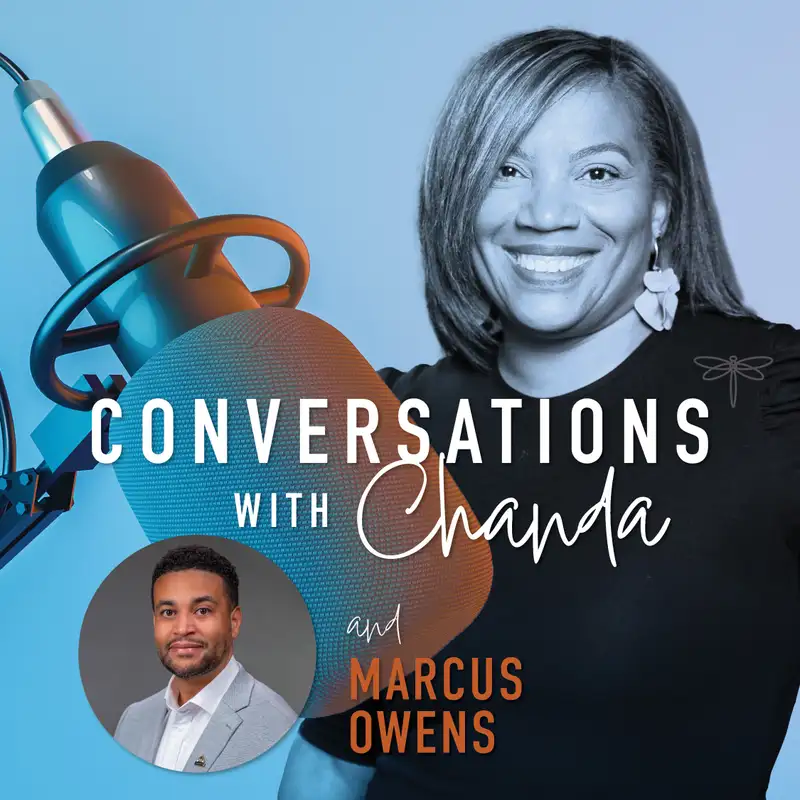
Alfonso Wenker: We are here today with Marcus Owens. Marcus is leading the office for financial empowerment at the city of St. Paul. Welcome, Marcus. Thank you for having me. Good to be here. Thanks for Yeah, thanks for being here. Thanks for taking some time. So you were telling me before we jumped on, here you are four weeks in to a new role at the Office of Financial Empowerment at the City of St. Paul. We wanna have a bigger conversation about leadership. You have a lot of stories, you've been deep in our communities in a lot of places over the years. But just to ground us and get started, why don't you give us a sense of that work and what you're focused on there.
Marcus Owens: Yeah, thanks. So I currently serve as the director of the Office of Financial Empowerment for the City of St. Paul. You know, this office, you know, actually began with the leadership of former mayor Melvin Carter III with the creation of College Bound St. Paul. Which is focus on helping families build college savings accounts for their children. And that origin story matters because it reflects a true belief that long-term financial security starts early and requires intentional public investment.
And today that the office, um, we call it OFE or the Office for Financial Empowerment, has expanded beyond just college savings into. Broader systems approaches. You know, we work to ensure St. Paul residents, especially those that have been historically, um, excluded from financial systems, have access to build assets and savings, navigate complex financial systems, innovate and create strategies to access capital, and also develop strong community partnerships.
To me though, this is more than programs, it's focusing on shifting systems for our residents. And we're asking questions right now around how does the city government embed financial stability in housing workforce development, small business supports and consumer safeguards, and how do we ensure that public dollars and policy decisions actually expand financial breathing room for the residents?
And for me, this work is really around dignity and power. Financial empowerment isn't just about managing money, it's about expanding options, reducing vulnerability, and really creating pathways to generational stability in a city where wealth gaps exist and they're very real.
Alfonso Wenker: There's a lot in there and, uh, it can be easy to encapsulate a person to their role, but there's the personal aspect of it, right? It, there's, there's something about who we are and how we are that draws us to a role. So can you speak on what about. The idea of financial stability speaks to you personally.
Why, why would you, um, jump into a, a leadership role under a new mayor, um, in, in a body of, and take on a body of work like that? What, what about that is personal for you? Yeah, this has been a journey for me for over a decade now, uh, working in the space of economic and financial, uh, development for communities.
Marcus Owens: Um, and a lot of my leadership is centered around, um, working in communities that, you know. Really, I've been under invested and neglected in terms of opportunity. So whether I've been focused in North Minneapolis on entrepreneur development or, um, broader systems change at the African American Leadership Forum around housing workforce development, I really believe that, you know.
Financial opportunity is a, is a key and a gateway for many opportunities, whether it's education, uh, whether it's, um, you know, self resiliency or family generational wealth. Like you have to have access to opportunity. You have to both believe you have that access and then truly have a door that you can walk walkthrough and, and so this moment right now, for me, this opportunity is.
Um, a reflection of that leadership the past decade, but also the belief in the leadership of Mayor Ali, her and what she has said that she wants to do, uh, for our city here in St. Paul. And that's really make government work, um, ensuring that residents have what they need, having, um, both the services and the policies that, you know, serve them the best.
And I think this office has the ability and opportunity to. Not only support those policies and those services, but also create different access points for residents where traditionally government hasn't been able to do that. You, you said, um, I felt a deep belief in, you said you have to have access to financial opportunity.
Yes. And you've been doing work in that space for over a decade. Who, who taught you that? Or how did you come to that? You, you say it with conviction and I believe you and I'm with you. And so where, where does that come from? Was it like, was there a mentor? Was there a, uh, a moment, uh, like how do you come to that conviction?
Yeah. You know, it's, it's interesting 'cause I started. Early, like, you know, in my career, um, I went to school for business. Um, so I went to, um, Minnesota State University, Mankato finished like Metropolitan State here, but my focus was on business. I was trying to find, you know, just like many young people, like, what's my path going to be and what's the path of both my knowledge, experience, but then also where I felt most comfortable.
And, and that's where I felt, you know. Both energy but passion. And that led to, you know, some incredible opportunities early in my career to intern in financial services. Um, I was working in, um, both banking and mortgage services. So I got to see firsthand how buying a home really transformed the way that people felt about their future and helping families help stabilize.
'cause this was during, you know, some of the hardest hit points in, in, um. Our housing, uh, home ownership journey, but helping people stabilize and stay in their homes. So just seeing financial capability, like how it, what it did for people's families. So like early on I got that and then I got to experience that, particularly the last 10 years, um, in leadership and economic development.
Like what it could really do when people felt like they had the opportunity but then actually, you know, could like realize that belief. Those internships, you know, I've had internships that, that, that were really critical. They kind of, maybe the classroom, there's an idea or there's some, you know, theory, but the internships sort of help you see that on the ground.
Alfonso Wenker: Like were there turning points in those internships or kind of like, oh, the, the aha moment of like taking that, that classwork to the real world, like little sparks in those internships for you? Yeah. You know, it was, um. I, I owned a mortgage company with several other people early on in, in that internship journey.
Marcus Owens: So like, I went from intern to like working in the mortgage company and then being a partner. And when I was watching my partners go out into, you know, their communities largely, uh, affluent white communities and, you know, they were able to provide these services, but I wasn't seeing the. Folks from my community getting that access.
You know, I made it my mission to kind of go in and understand how to, um, create these pathways. And so, you know, working with some young people that were, you know, first time buyers and just kind of hearing their stories around, you know, their hopes and dreams really gave me both the belief, but then also like open me to the, the possibility like, well, these services are happening in mainstream.
Like, how do we bring them to places where, you know, people. Should have the access, but then also should have the knowledge how to, to access those resources. Right. And so like to me, that became a personal mission of like, how do I continuously do this work no matter where I'm at? But then making sure that those that don't have access have a connection point, and then it's really on them to kind of step in and take advantage of those things, but minimally, you know, be a bridge across these systems and communities that have long been left out of them.
Alfonso Wenker: I was feeling that that bridge metaphor, as you said, there's a dream. There's the information that then leads to access. And what, what do you see happens in a person, in a family, in a community when, when you can go from dream to the information and education or whatever it is to, to pursue that dream, that un unlocks the access?
What does that do for someone? Or what, what did it do for you as you were part of that bridging? Yeah, like. It opened my own eyes because I didn't, you know, necessarily come from. You know, a community or a family that had all of this information itself. So it wasn't like I was just, you know, grandfathered in and I just knew where it came from.
Marcus Owens: Like these experiences in financial services and financing like opened my eyes and it gave me a lot of just. Personal energy, uh, to pursue it for my own family, right? I bought my first house when I was 26 and you know, I've continuously been a homeowner. So like, just being able to see what that's been able to do for me and my family, it's like, oh wow.
But then translate that. And then when I've had conversations, I think about, um, when I was doing work at Neon and we were talking about entrepreneurship, and folks would come in, they would have their ideas and they're like, oh, I want to be. A caterer or I wanna open up a restaurant, and you're like, okay, that's great.
Well let's talk about your experience, let's talk about your knowledge. And oftentimes they didn't know what they didn't know. So we would try to like bring information to them to share like, Hey, you know, this is the things you need to know about owning a a, a restaurant, owning a business. But then we try to create opportunities for people to test those, um, abilities and that knowledge.
And we would do it in ways of, of popups and. Um, you know, one time restaurant opportunities where, uh, an entrepreneur went from idea to like, oh, I can cater a family event, and oh, I can come into a community event now and cater, and now I think I'm ready for that next step. And once they got in, they're like, oh, wow, I didn't realize how hard this is.
Um, maybe I need some more steps. But they already had built the habits of getting that knowledge and then applying that knowledge. And so to me it's like. It is not just about like, here's the information, go figure it out. It's like, how do you give folks the space to absorb that information, practice that you know, what they've learned in a real way that then builds the muscle, um, of whether it's entrepreneurship or buying a home or, you know, going and getting further education.
Like you've gotta give people that. Real steps to that bridge. Not just like, there goes the bridge over there, good luck, but like, really give them access. Like to me, access is about, you know, this relationship, this dual two-way relationship between, you know, the system and the people. It's not just about the individual having information and, and then, you know, applying for whatever the other end of that bridge is.
It's like actually walking with them and, and being a partner, um, along the way. Yeah, it, it reminds me like folks will say like, well, the door, the door is open. And you're like, well, you know, if you've never seen someone like you go through that door, or, uh, you don't have anyone in your family who's ever been on the other side of that door, like, you could look over there and be like, maybe that's for me.
Alfonso Wenker: Maybe that's not for me, but I, I need more, more than just, Hey, the door is open. Right. Right. No, you, you need real steps to like understand, because there's, there's, there's a lot of history. There's a lot of, um, ancestral history of people, um, trying to go through those doors and harm happening to them.
Marcus Owens: Whether that harm was intentional, where, you know, whether it's redlining or, uh, it's denials or it's racism or it's. Classes, whatever it might be. Like there's real harm, but then there's undue harm where people just didn't know what walking through that door meant and what you needed to bring through that door with you.
What type of knowledge and experience that you do so that you can stay on that side of that, that that gateway, if you will. And so that partnership, when we do this work, that partnership around. Giving people information so that they can fish for themselves, but making sure that you're along the way with them so that if they encounter, um, confidence or they, or, you know, lack of confidence or they lack knowledge, or they lack, you know, what that next step looks like.
Someone's there to, to be with them during that journey. Right? And so, yeah, I'm all about bring, pulling yourself up by your bootstraps. But it's not, to me, that's not a realistic thing for everybody. There are some very special people that all they needed was. You know, the five steps and they can follow through.
But most people want, you know, a confidant, someone that they can, you know, check in with to ensure like, Hey, if I do this, what are the risks? What are the opportunities? How do I take advantage of this? And then how do I do it for a long term? Because it isn't about just buying a home. It's about activating that home for, you know, wealth building, being able to access the equity in it so that you can put your kids through college or buy that business.
It isn't about just buying that business, but it's about giving really great service or a great product so that you can expand and create opportunities for other people so that they can then in turn, you know, invest in their own community. So like. The whole financial journey, financial opportunity actually feeds on itself because if we invest in individuals and eventually they come back to community, they can invest in that community.
If that community can circulate and generate energy, then ultimately become self-sustaining. You know, it's interesting because you're talking about, uh, walking a journey of financial empowerment with, with an individual person. As part of systems change, and I think sometimes people forget the part where so many folks are born into opportunity.
Alfonso Wenker: So they have all of the informal folks to walk the journey, folks to open the door, folks to be the bridge who are around them. And part of changing the system is developing more people who can be proximate to more people to walk that journey with them. So that. Any of us who aren't born into that opportunity, um, there are people we can locate, you know, around us.
Maybe they're not in our immediate family, but maybe a generation from now, we are that person in the immediate family. Absolutely. Absolutely. Um, you know, you've mentioned habits a couple of times and this kind of decade plus of, of leadership and so what are some of the habits that you have developed to sustain yourself, um, for the long term in doing this systems work around financial empowerment.
Marcus Owens: Ooh, man. There has been some lessons on this journey. Okay, let's hear 'em. Let's hear 'em. You know, I, I think about early on, um, in my journey coming from the corporate sector into community development and like the energy and eagerness, I had to just like pour everything that. I either knew or experienced into the work that I was leading, um, at Neon because I, I clearly saw the opportunity, like if we can unlock entrepreneurship in this community and create a culture and a dynamic where folks are both interested and capable of starting and stabilizing businesses, like what it could do for our community, and I poured.
Everything. I had Intuit early and you know, some really great results. But I got a year and a half in and I just was drained, absolutely drained. And I did not know how to replenish myself. And so, you know, thank God for my wife. I was like, babe, I need, like, I just need a break. Like I had two young kids. I had a teenager that was in middle school at the time, and so like.
I didn't just have the work, I had home like, you know, leaders doing this work. We're not just like one type of person. Like we don't just work or we don't just, you know, do our job like we have Multifacet. So it's like, I don't know how to at, you know, I'm 30, early thirties at this point, like, I don't know.
How to replenish myself. So I said, look, I just need, gimme three days. I just need to get away for three days. And fortunately she was cool with it, with two toddlers or young kids at home. And I went to Puerto Rico. And Puerto Rico has been a place where I've always had interest and I always like found like.
Um, a place to go. And the reason why was that one, it was within the United States, so I could go down there and, you know, everything is set up, but then the people and the culture and nature all exist there. And I, I knew I needed to be by water, like something about nature and water to me, like is a replenishing kind of, um, feature.
And so. That first trip helped me understand like, okay, I need to both create retreat. I need to be in nature, near water, and I need to create movement. So these are the three things that keep me like grounded. And so like that first trip helped me understand like, all right, if you reflect back on what you just did the last three years or year and a half at this point, and you start to forecast out what that journey may look like, I can recenter myself.
Being around nature, whether it's trees, um, water, things like that, nature has a way to like replenish you as well. And so like focusing on nature and then movement. So I've gotta move, I gotta walk, I've gotta work out, I gotta do something. So like when I, when I did that retreat, like I element, I created all those elements in that environment.
And then when I came back, I was ready for more. Um, and that helped me like at least get my journey started on, on wellness and thinking about it. And throughout some great experiences as a Bush fellow, um, you know, 2017 through 2019 helped me further invest in those practices, right? And today I use it and I'm very intentional.
So. I now lead a, a leadership retreat every January down to Puerto Rico. We spent four days this year I've partnered, or this last couple years I've partnered with the Minnesota Black Collective Foundation and the New Sons Fellows. Um, last year we had nine fellows come down. This year we had 20 fellows come down, but being able to help create that access point for folks to retreat.
Um, and this year was so critical because of all that was happening in the Twin Cities with the, the metro surge. We didn't realize as leaders, and we had leaders, you know, that were entrepreneurs and artists and business folks and organizers and all the, all the different type of leaders in our community.
We were all impacted by this surge in different ways. Right. And we didn't realize how shocked our nervous systems were until we got down to and off the plane and being able to just spend three days to just like. Reflect back, like how did we get here? And then what does leadership look like moving forward?
And I try to do this at least once a year in January because Minnesota is so cold and getting some vitamin D and all these different things is so important, right? And so to me it's like, you know, always be by nature, always have movement, and always reflect and look forward. Helps me stay grounded in this work.
Alfonso Wenker: I, I love that. And I feel like in so many conversations. Folks like you are talking about how necessary taking space for yourself is when, when you're community-minded, when you're oriented to the, the dreams. And like you talked about, building dignity and power and options and stability for our communities.
Um, there's a lot of pouring out that happens and, um. Every time I talk to folks about things like this, it's like, and then how are you pouring in to yourself? Um, and I'm curious, are there signals for you? Like if a leader was thinking about like, what's my barometer? What's the gauge? How do I know that maybe it's time to take that space away and, and do some filling up.
Like what, what are some of those little signals that, you know, I it's time to take space, and then when is it too late? Yeah. Ooh, ooh. That's a, that's a deep one right there. Um, the, the barometer has been really the work. Um, you know, it's easy to do these things like, oh yeah, I'm just gonna go take a walk.
Marcus Owens: I'm gonna go in nature, I'm gonna reflect, oh, that sounds good. But if you don't know when to do that, you, you, there is a threat that. You go too far and it doesn't replenish you. Right? And so, like, when I think about my barometer, um, I think about how I'm affecting the other people around me. And so, you know, burnout, being tired, being worn out.
Pour all this out doesn't just affect you as an individual. It affects your team, it affects your family, it affects your community. And so my brammer is how am I in relationship with the people that I care about? You know, for here it's my team, it's my home, it's my family, things like that. And so I'm, I'm.
Constantly thinking about my interactions with, with folks, do I have time for them? You know, am I, do I feel scattered when I'm having conversations with them? Do I feel strategic? Am I able to like think about what they're bringing to me in terms of problems and and opportunities and challenges? And am I able to give something back if I'm not able to do those things?
That's my first sign of saying, okay, look, you need to take a step back. You need to think about where you're at right now in this journey, and then remember why you're doing it. Remember what you need to do to recenter yourself and. When, and the simple thing that I do is a simple practice where if I feel overwhelmed or I feel like I'm not giving my best to other people, or I start to feel negative, or I feel, you know, pessimistic about the future, you know, I do a simple practice, uh, and it's a spiritual grounding where I put both my hands to my heart and I just spend five minutes.
Eyes close, quiet, and remembering the good things, remembering the positive states of mind that I've been in and releasing. What may be negative to me right now. And that just helps me stay grounded in the moment, you know? 'cause not, I can't go to Puerto Rico every week. I wish I could. Right, right. Yeah.
But you need things that can sustain you in real time, in real moments. Right. And so, to me, that barometer starts with the team. There have been times where I've gone way too far and I've gotten to the point where. I am now negatively impacting others, and if I don't step back, I have a, you know, a risk of losing myself in this work.
And I think a little bit of checking your own ego. Helps you not get to that end, right? So oftentimes in this work, the ego will tell you like, I am the only one that can do this. I have to stay in it because if I don't stay in it, then the work won't get done. Um, the people won't get served. Um, and that's so far from the truth.
There is so many people in this work that we can hand the baton off at any time and take care of ourselves so that we can get back into the race. Right? There's, there's this un. Balanced belief that we are the only leader and the only person in this time that can do the thing, whether that's leading the organization or lead a specific type of work and not realizing there's so many people around us that want to lead, that are capable of leading, and that if we are able to do it together, we actually get a better result.
So like. If we can take ourselves, take the ego out of the work and realize like I am, I'm tired, I'm burnt out. I am not giving the best that I can. I need to take that step back. Right. And I, and I, I kind of wrap this all up. I think there was four parts of leadership when I was at that, the, the African American Leadership Forum that we talked about.
It's like you're, you're capable, you're able, you're willing, and you're ready or you're, you're, you're he healthy and you're ready. And so like. Your willingness is like to work with other people. Your capability is like your capacity to absorb information. Your healthiness is spiritual, physical, emotional, like are you regulated and are you ready?
Because if anyone of those categories, you're not, you need to take a step back because you actually could do more harm to the community and the people that you care about than the good. Yeah, I, I feel that, and it strikes me as we think about, like we started at, you're in this financial empowerment job.
Alfonso Wenker: You've been doing this work for over a decade, and it can be easy to think about financial empowerment as an individualistic exercise, like my own financial wellbeing, my own. Whether it's my debt or my savings or my, my credit capacity or my ability, my spending power individually. But you're talking about the spirituality behind it, the collective nature behind it, um, and the systemic nature behind it.
And so. Uh, talk me through that a little bit more like that, that may not be the immediate, uh, way that most people think about, like, uh, being financially empowered. People might think about their own bank account or their own sort of stability, but you're taking a holistic view and, and what's important about that?
Why, why do those things emerge for you? Yeah, so, you know, it, it's this fine balance because. All of this starts with the individual and we have to, at the system level understand how a system impacts the individual. And likewise, like how does an individual impact the system, right? So like there's this relationship between system and individual.
Marcus Owens: Um, I, I'll use the analogy 'cause I played a lot of team sports growing up and, you know, I, football was my, my number one sport. And at any given time you've got 11 teammates on a field and. Those 11 teammates are all individuals, and each of us had a responsibility to pour into ourselves, whether that was working out or studying or resting or, um, understanding our assignment and understanding how we impacted everybody else.
And on the teams that we were super successful. All of us did the work individually. All of us did what we had to do to make sure that we were both. Um, capable, but then also not exposing where the weakness might be on our team. Right. And so I think about that in community development where. If we give people the capabilities, the um, uh, the capacity to absorb their own personal, uh, abilities, we have now just invested in a lot of people that can now become a collective community.
When that collective community is, are starting to operate as a collective now, because the people are well now, they can contribute to. Their own specific community, but then the broader community at large. And so when we think about our systems, when we think about cities, you know, our city is only as healthy as the people are.
If we've got pockets of community that aren't, well, they're not getting capabilities or financial capabilities, they're not participating, maybe in the workforce, they're not able to buy a home, they're not able to stabilize their house, um, their kids aren't able to go to school and are prepared to learn.
Um, our, our, our health systems become overwhelmed. Our public work systems become overwhelmed. The city actually has to pour more resources. Into them to stabilize folks. And if all of our resources go to just trying to help people get to a stable place, we're not able to invest in the, the opportunity, the richness that a city could have or a region could have where everyone's thriving and everyone's living the best life that they can live, that they choose to live.
And we actually can, you know, both reduce the, the cost, but then we can also create. Better, uh, and rich in cultural communities overall. Something that I'm hearing is like people will talk about like Maslow's hierarchy, like you need a bed and food and warmth to begin, but. I think we can be limited in that.
Alfonso Wenker: Like when you talk about if we just focus on stability, like, well what are we pursuing? What do we want? Like, is there a horizon beyond, like, I had somewhere to sleep and a meal to eat today and, um, that's, that's less motivating. So I think. Part of what I'm hearing you say is we have to cast a vision, a dream for, for our collective, whether it's the city, whether it's our family, whether it's sort of cultural communities that we're a part of.
Like we have to, um, imagine a future state that is more than just having the basics. But that is like, um, like you've, you've brought up health and sort of. Doing well and being able to dream as beyond. And I think, uh, like in a government role, it can be easy to like focus on those, like really narrow, like more people had three meals today and it's like, that's important, it's essential.
Um, but maybe we could go farther to together if we are always holding that bigger picture dream. Absolutely. Absolutely. I, I think. Oftentimes, and I think motivation and inspiring is, is a critical component to all of this. Like we all wanna feel motivated, we all wanna feel inspired, and we feel like we're living a better life when we can actually get into that head space.
Marcus Owens: But if we know that people are struggling and people aren't able to even understand where their next meal is or where they're gonna live, like oftentimes that depresses the entire community because we know that the ones that with the least are not well. And so. What that does to the psyche of a community, what that does to a psyche of a city, um, doesn't allow us to go into the future, or it allows only very few.
And it creates these divides in our community where only a few get to imagine and dream what's possible versus the collective. And so you don't want to create this stretching of those that can and those that can't. You want to actually bridge those two so that everyone can go together, and I think that's important.
Um, I, I also think about it. I mean, and some of it is the simplest ways of thinking. So like, I'm raising children right now, they're teenagers and you know, we talk about success and they're like, oh, I wanna be successful. And I'm like, well, what does that mean to you? And you know, oftentimes we think about money and we think about stuff and we think about materials or titles and jobs, and it's like.
How do we break this down to something that's more core to who you are? And to me, success looks like you can take care of yourself. You know how to be happy and you are useful to someone else. These are just core things, like if you can do that, it doesn't matter what your title is, it doesn't matter what type of house you have, it doesn't matter what's in your bank account, but if you can take care of yourself, you can learn to be happy, and happiness is a journey, it's not a destination, and you are helpful or useful to others.
To me that's, that's success and that that can translate into community from the individual all the way through the community, into the system level. Yeah. Care for self happiness, useful to others. Uh, is this, is that something that developed over time for you? Or did, did that come from somebody or place, or is that kind of a compilation of, of lessons over time?
You know, I think the first time that I. Kind of, it was able to articulate that. I think it was an interview that, uh, president Obama did, and he was talking about his daughters and he had a version of this same thing. And I'm like, wow, that makes a lot of sense. Because when I was in, you know, high school and things, I had a community that.
Pour into me a community of teachers and coaches and adults that saw something into me, and I didn't really un initially understand what to do with that. However, I was open to their investments and in me, and that led to this responsibility and duty of like, okay, take care of yourself. Make sure that you aren't, you know, a burden on anybody else and that you can, like within community.
Take care of yourself. And then it's like this journey of like wellness is around this journey of happiness. Like what's going to make me happy? What's gonna make me feel whole doing whatever it is that I'm doing and understanding that it isn't like, yeah, I'm happy it's over, but like, yeah, today I'm happy.
Or you know, this year I'm happy or I feel really great about the things I'm doing. But then tomorrow. I could, that could all flip, but just this journey of like being able to be well is, is related to happiness. Um, but then this duty, this responsibility of like pouring back in the community, 'cause the community poured into me.
To me, is that part of like. Be useful to others, right? And knowing that your success, your ability to take care of yourself, your ability to be happy isn't an individual journey. This actually is in relationship to other people that you are around, whether that's family or neighbors, or community around you.
So how do you, how are you in community with others? And how are you using your gifts and the things that you've been invested in? Back to where it comes. So that becomes a full circle. Yeah, the full circle I think is really important in leadership right now. You know, we talk about there's a loneliness epidemic and part of part of why we're we are not well right when you talk about wellness is 'cause we're so separate from each other.
Alfonso Wenker: We don't think, we don't think communally, we think individualistically and um, and then. It's a vicious cycle. So it's, it's sort of the antithesis of what you say. 'cause then if you're lonely and, and isolated, you might not invest in your own wellness. So then you can't be a part of kind of giving back or, or giving forward with folks.
Um, so it, it just strikes me. I was in some conversations over the last couple weeks about the, the former Surgeon General of Vivic Murthy is, is on this mission to, to combat this loneliness epidemic that we have and, um, that isolation prevents us from, from doing that, that communal care. Oh man. So true.
Marcus Owens: So true. Um. You've sort of answered my next question. I want to pivot because when we were getting ready to, um, have this conversation, I said, I, I always want to ask folks, um, what does it take to be a leader right now? And I think you've lifted up, you've talked about taking time and space. You've talked about wellness, you've talked about giving back, you've talked about spirituality.
Alfonso Wenker: But how, how do you talk about or think about. Being a leader right now, and that's probably different from the kind of leader you needed to be a decade ago than five years ago than maybe even last year. As you move, you know, now that you move into a government role. Like what, what does leadership take right now and, and maybe next to that, like what do leaders need to let go of in this moment?
Marcus Owens: Wow. Wow. Um, leadership, I mean, is, it's, it's a constant evolution, but I think there's always like core things that we need to be thinking about as leaders. And this is, you know, to me leadership is expansive. It isn't just like someone that holds a title. Leadership isn't your position. Leadership is who you are as an individual and how you lead other people.
Right? And so when we do the retreat in Puerto Rico, we have a session around leadership and, you know. The first time we did it, everyone brought their vantage point as their position, their title, and we said, no, eliminate that, that belief that you are your title, because again, it's a marathon. There's batons to be passed.
So your title today will not be your title tomorrow. So like ground yourself and leadership is, is a journey and it isn't about position, right? So first and foremost, but right now. I would say that the things that I, I'm, I'm both considering in my leadership and like, um, looking around me and paying attention is that the pace of change is extremely fast right now and it requires us to be very adaptive.
Um. You know, I do some amazing work with, um, some, some colleagues in the work Bow, Howard Robbe and Tracy Fishman. And we've, you know, started rooted to Last, which is focusing on, you know, leaders of color, and particularly those that are trying to bring resources and community. And we talk about movements and we talk about like what is the arc of a movement.
And movements aren't just, you know, we're organizing against opposition of something. We are in a time when it feels like the things, the morals, the values, the things that we hold dear are actually under attack. And so that pace is happening a lot faster than any time in history. So like, how are we adapting ourselves?
Um, you know, the folks, the people that are doing this work, the community, they're tired. And so we as leaders need to be grounded. And so ensuring that we're. Taking care of ourselves. But we need to be humane in our thinking about this. We can't just be on attack all the time. We need to be taking care of our people and we need to take care of ourselves.
Right. And then I think what is most critical, and I think the thing that I, you know, want to be mindful of is that we're not, we're thinking more. Than just today. And we're thinking beyond the right now, like this battle that we're in right now as leaders in community that care about, you know, humanity in a lot of sense is that this has been a long time building and the movement that is actually that we're receiving right now has been developed over time.
So we need to be thinking about how do we build not just a counter movement. But the movement of the community that we wanna see for a long haul. Right? And in order to do that, we have to collaborate. You know, we need leaders at various stations of the work. Um, some focus on the response now and mutual aid and support and things like that.
But we also need others thinking and building new systems and strategies that will inspire, motivate, a cohesive long-term movement, um, that gets us into a direction where. We're, we're all moving together versus, uh, separately and in silos. And so really, you know, if I were to break it down, like we gotta be really good at listening right now.
We gotta be really good at building coalitions. We need to be really good at holding complexity, and then we have to make hard decisions without losing compassion for each other and for, for the others, ultimately is, oh. Hard decisions without losing compassion for each other. Let's, let's get into that for a little bit here.
Alfonso Wenker: Um. What, what leads you to say that? I, I, I could go in on that myself, but I wanna know what, what leads you to, that was kind of your cherry on top of, so I don't wanna lose that. Yeah. You know, compassion is, is, to me, is, is an act of love and, and it's a act of like humbleness, like. This isn't about sides.
Marcus Owens: Yeah. There are some individuals that really wanna make this about sides. They really want to divide the, the masses of us, the, the, the larger community of us to believe that is a either or. You know, one of the hardest lessons I learned just as is, as a leader and as a young person, is that the world is not black and white.
There's a lot of gray, there's a lot of shades of gray in between and there's a lot of many truths that people hold that you know. Um, are often exploited to create sides. And so I say compassion because everyone that may have voted a certain way or may say a certain thing, that doesn't mean that that's core to who they are.
They may have just got caught up in a moment they may have like, oh, well I trust this individual. I trust these people. Therefore whatever they say, I'm going to trust until I'm given other information to not Right. And so the compassion part is like. I need to be firm about what it is that. I care about and collectively we care about.
And let me not throw people away or just spend my time arguing or debating with these individuals, um, without a, a, a end goal in mind, without thinking about, well, I may not get them today and let me focus not just being in opposition about what they're about, but let me be more about pro, about what I, I care about or what my community cares about.
And so. Make those hard decisions. Hold the complexity, build those coalitions and continue to listen because eventually those tides can turn again and you can bring people along that maybe, uh, have been despondent or maybe have not been connected to the mainstream and are now just starting to get activated and they just happen to be on the other side or the opposition right now, but leave room for them in case they are, you know, going back and forth.
Right. That you just don't know. Nothing's ever hard and concrete. Yeah. Um, you said be firm without throwing people away. I think that is a lesson that we all need. Uh, we've become rigid. Maybe I'm splitting hairs here, but like firm is like, I'm sturdy. I know my values, I know what I believe. I, I know that Dr.
Alfonso Wenker: When we talk about that dream, what being well and whole looks like, what we're pursuing. Um, but I don't need to dehumanize you. Uh, if, if we disagree. Now, even if you wanna cause me harm, we're not gonna be in relationship, but Right. If, if, if our worldviews. Are divergent. Um, how can I practice not thinking of you as disposable?
Like that is like be firm without throwing people away. I think that is so important and, and there are so many people right now in our communities here in Minnesota who are, um, new to being active, active. In, in collective community care and we love the energy, we love the enthusiasm, and I hope that they can hear messages like that, that we, we are foreign against some things, um, and that part of what we're against is dehumanizing people.
And we gotta, we gotta be careful to not dehumanize people who, who currently aren't thinking 100% exactly what we're thinking. Right. Well, and I think part of that is like focus, focus more on what you care about and what you need to do versus trying to be just in opposition or mad because the news cycles, the social media threads, we can doom scroll until we're blue in the face.
Marcus Owens: But that's, that doesn't, nothing's changed about that. If we center our energy about the people, we care about, the things and the issues we care about and how to build community the way that we want, that becomes less important, and we only have to interact with it when it's getting in the way of our progress.
Right? Put, be, defend, you know, defend the things that you care about when you need to defend them, but don't just be on the front line to defend it if the, the, the forces haven't changed yet. Let the folks that need to like manage the front, manage the front, and then we need some other people managing the, the, the middle and the back, and to ensure that we're bringing more people along with us, so then our front is actually stronger and we can actually push forward with the things that we care about.
Alfonso Wenker: Absolutely, and, and also take turns, right? You don't have to be at the front all the time for everything. No, no, you know, back, you know, switch the front, you know, you know, this is all strategy, like whether you think it's military strategy or game strategy, all these things, like there needs to be a strategy where people understand both their role and we also harness the energy that exists.
Marcus Owens: So when we have to push forward, we're doing it collectively. Not one person at a time or left side, not the right side. Like that's, to me, strategy involves us harnessing that energy when young people are getting involved and they're super energetic and they're ready to be out there to all kinds of times at night to to hear their, have their voices heard.
Like, let's harness that. Let's not like demonize it. Let's not, you know, like just say, oh man, there goes those, those, those agitators and things like that. Like let's support them. But then on the back end, like, let's make sure that they understand like, alright now. Come and take care of yourself because you're gonna go back out there and do that again tomorrow.
But don't just wear yourself out and drain yourself out because we're gonna need you in this long haul. This isn't just a flash moment time. This is like a fight that we're gonna have for multiple years, multiple decades, and it's, it's a continuation of a fight in battle that we've had for generations and generations of, of individuals.
So, you know, let's harness that energy. Let's be strategic. Let's not just stay into the doom space. Let's start to build, and then we can start to overcome some of these, these obstacles that we're in front of right now and ensured while we do that, we stay compassionate, we stay humane, and we take care of each other.
Alfonso Wenker: Oh, I, I love that. I love that. We're, we're coming up on our time together, Marcus, and I've got a couple of things I want to ask you is, you, you talk about staying out of the doom space. What are you listening to or reading or, you know, what, what are you taking in, uh, to keep you out of the doom space right now?
Marcus Owens: Ooh, what's keeping me out of the doom space? Um, I mean, my kids keep me out of the doom space. Um, they're very active. Um, they're, they're really good students and, um, athletes and so being able to just be in the moment with them and watch them compete and do well, like, allows me to remember that it isn't just about the work day in and day out.
Um, I think that the things I'm listening to right now. Um, I, I always go back to like, you know, certain podcasts or certain, um, uh, books that always remind me of this wellness journey. So, um, I listened to Tony Robbins and, and Tim Ferris. They have this wonderful podcast that came out like 10 years ago that just talks about being in a beautiful state of mind.
And so every year, sometimes twice a year, I listen to that one podcast episode. Just so that I'm reminded like, oh, you need to, you know, put your hands on your heart and do that practice. You need to remember that this isn't just about achievement, but it's about like a beautiful state of mind. It's, we, we can achieve until we're blue in the face, but that's not going to create harmony in ourselves.
And so I'm listening to that. Um, and then I read a lot of like, just. Fiction, like sometimes you just gotta get out of reality. And I, I, I love, uh, mystery science and, and things that involve adventure. Yeah, I, I heard somewhere was, um. It was a psychologist or something said like, mystery is really good for our brains.
Alfonso Wenker: 'cause it has a structure, you know, like you can follow along with it. Well, um, I, I've really appreciated this conversation. I'm leaving with some grounding, with some practices, with, with some habits I need to think about with some. Perspective, uh, that is different about what financial empowerment looks like.
If, if folks want to learn more about what you're up to in the city of St. Paul got a shout out. St. Paul and the St. Paul kid. Um, that's right. You know, where, where, where can folks learn more about what you're doing in your office? Yeah, so you can visit us on the City of St. Paul website. So, um, city of St.
Marcus Owens: Paul, I believe.ci, dot uhn us. Um, and look for the Office of Financial Empowerment. Uh, you'll, there, you'll find actually we're releasing a, uh, a resource hub, uh, March 2nd, that's gonna have a ton of great resources for families and communities, uh, here in St. Paul. Whether you're looking for housing, you're looking for, uh, emergency aid, you're looking for business support, um, you're looking to get signed up with your kids with the college bound.
Like all this is gonna be part of our website, but there's gonna be always resources there. You can find us on, on Facebook as well. Um, where you can find the city of St. Paul, office of Financial Empowerment. Um, there will have some more resources, but for families that are in St. Paul. Make sure you're connected to college bound.
Make sure that your students that are born after January 1st, 2020 have their accounts set up and that you are activating the bonuses and incentives that exist there and, um, continue with us so that you can, um, you know, continue your journey or financial empowerment. Alright. Marcus Owens, thank you so much.
Alfonso Wenker: Always a pleasure to connect. I appreciate you, appreciate all the insights today, and I'm gonna let you get on with your day. Thank you. Thank you.